Our Projects
Real results from real yards. Follow along as we transform a bentgrass-infested lawn into a thick, healthy turf — step by step.
Creeping Bentgrass Removal & Lawn Renovation
Massachusetts Residential Property
This property had large areas overtaken by creeping bentgrass. Creeping bentgrass spreads through stolons — it creeps along the soil surface and via seed, creating dense mats that choke out good grass. Bentgrass is not recommended for home lawns because it is a high-maintenance, aggressive grass that forms unsightly, puffy, light-green patches that differ in color and texture from typical turf. It requires extremely low mowing, high water, and constant disease management to avoid turning into patchy, brown areas.
Our team killed off the old bentgrass with multiple applications of Round-Up, removed the dead turf with a sod cutter, laid fresh soil, and seeded with a premium New England blend. With consistent watering and a timely starter fertilizer application, the lawn came back thick, green, and healthy in under two months.
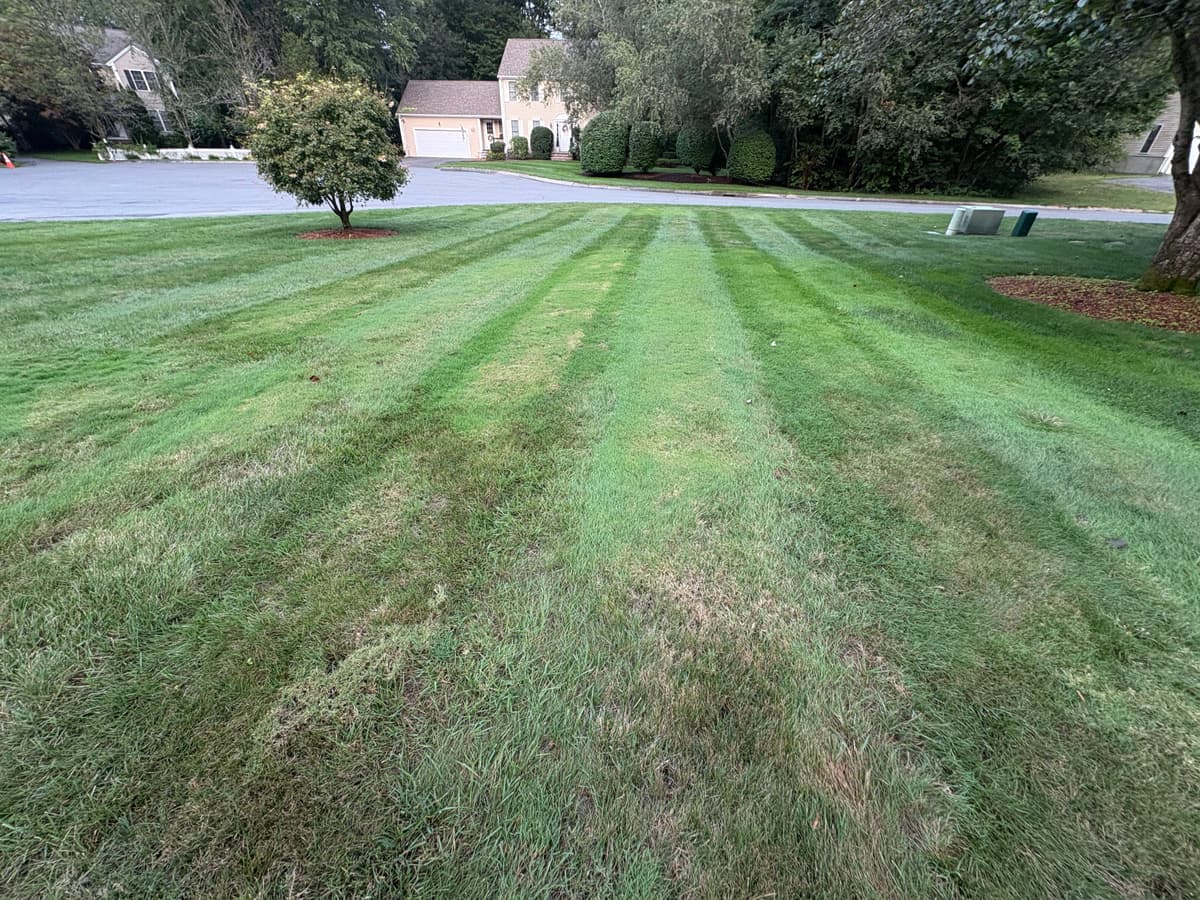
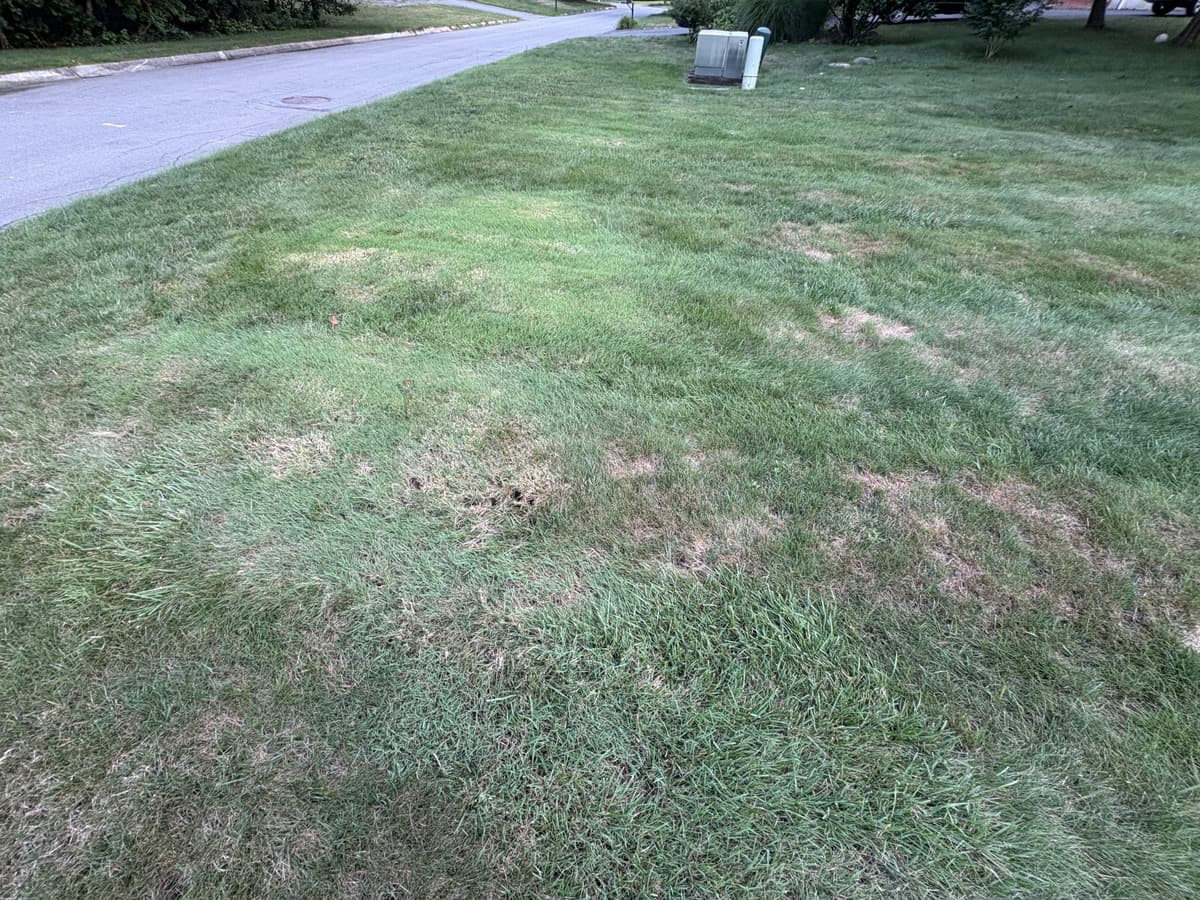
Bentgrass Infestation — 7,000 Sq. Ft. Affected
About 7,000 square feet of lawn was infected with bentgrass, and the goal was to prevent it from spreading and overtaking the remaining 10,000 square feet of healthy turf. You can see the light, turquoise and pale green grass stand out, as well as the damaged, brown bentgrass mixed in. This took about 5–7 years to grow this large.
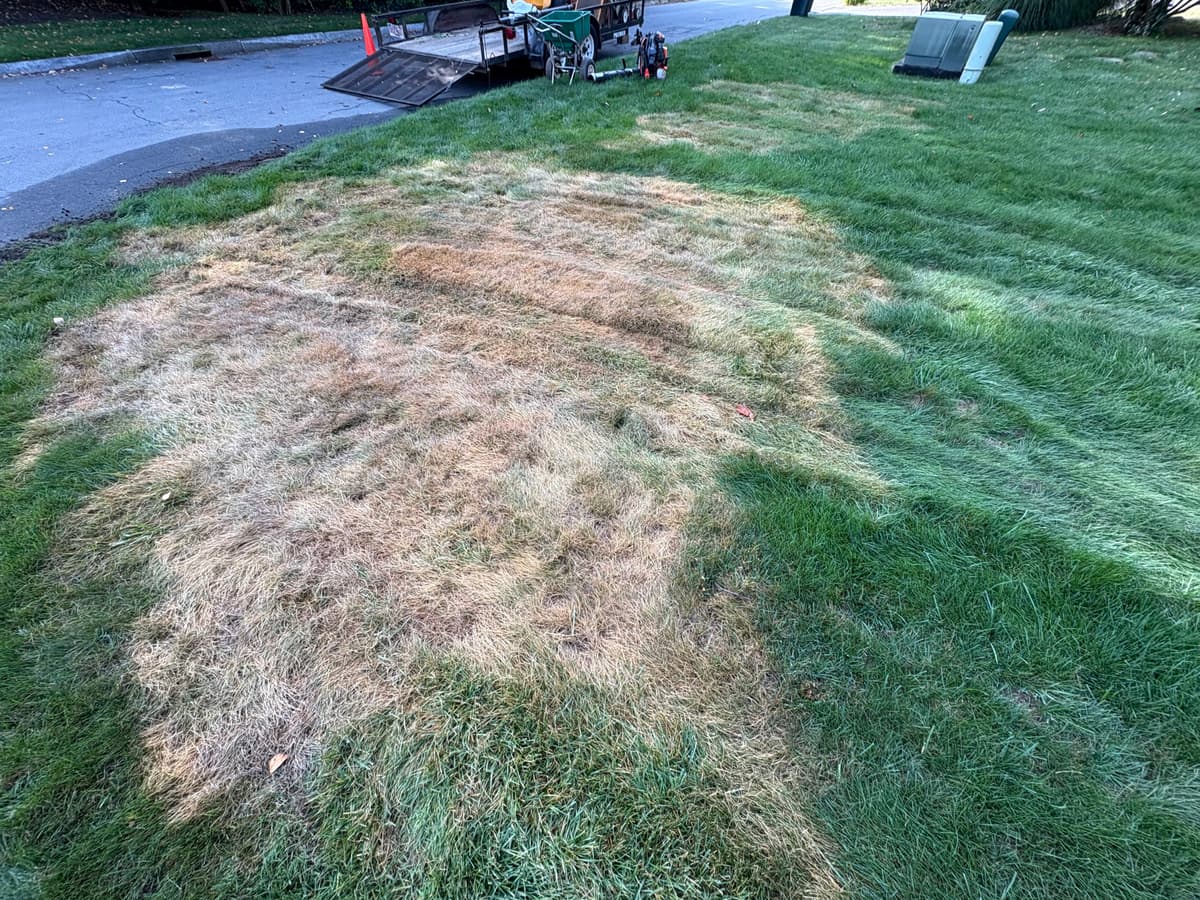
Killed Off Old Bentgrass
After spraying the old bentgrass several times with Round-Up, the unwanted turf has been fully eliminated. The dead grass is clearly visible across the affected areas, ready for removal.
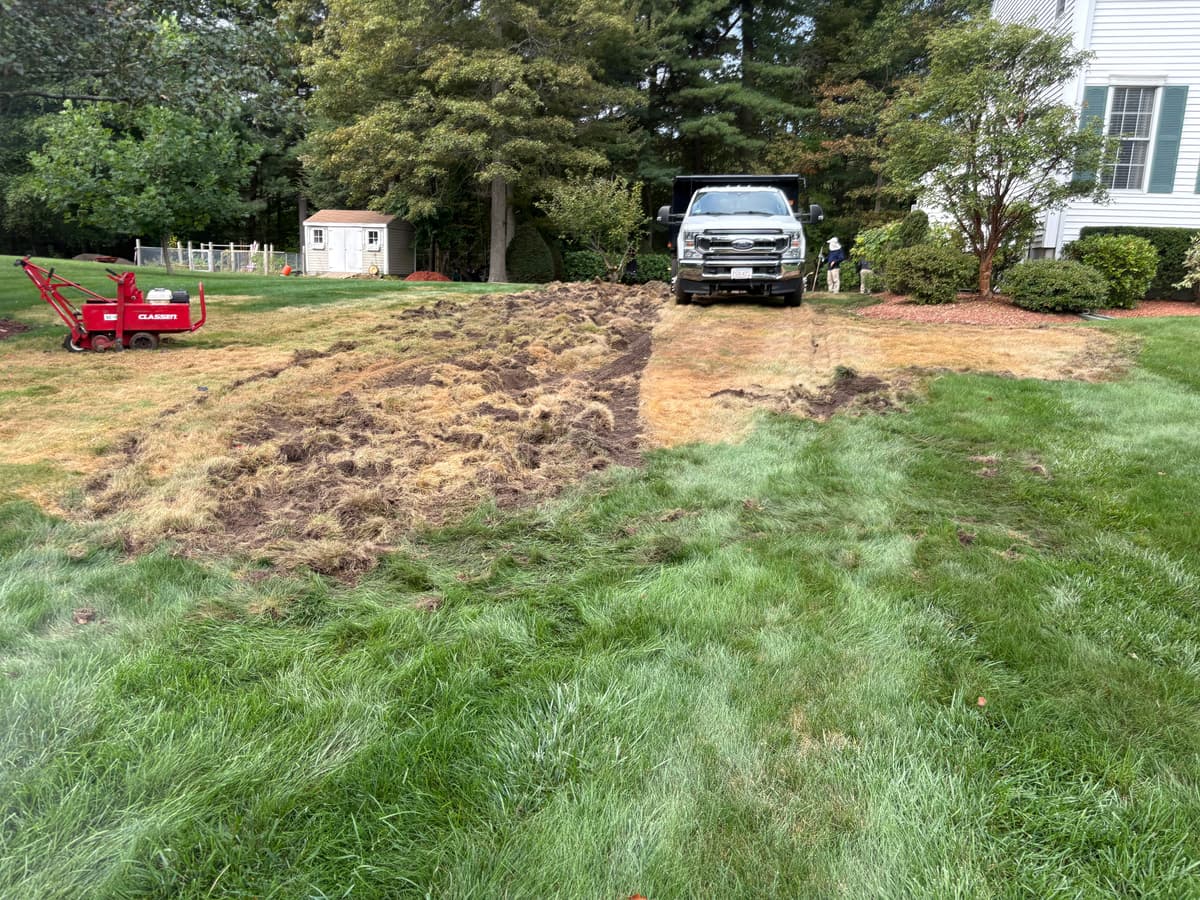
Sod Cutter — Removing Dead Turf
Used a sod cutter to rip up the old dead grass, clearing the way for fresh soil and new seed. This step removes the root layer so the new lawn can establish without competition.
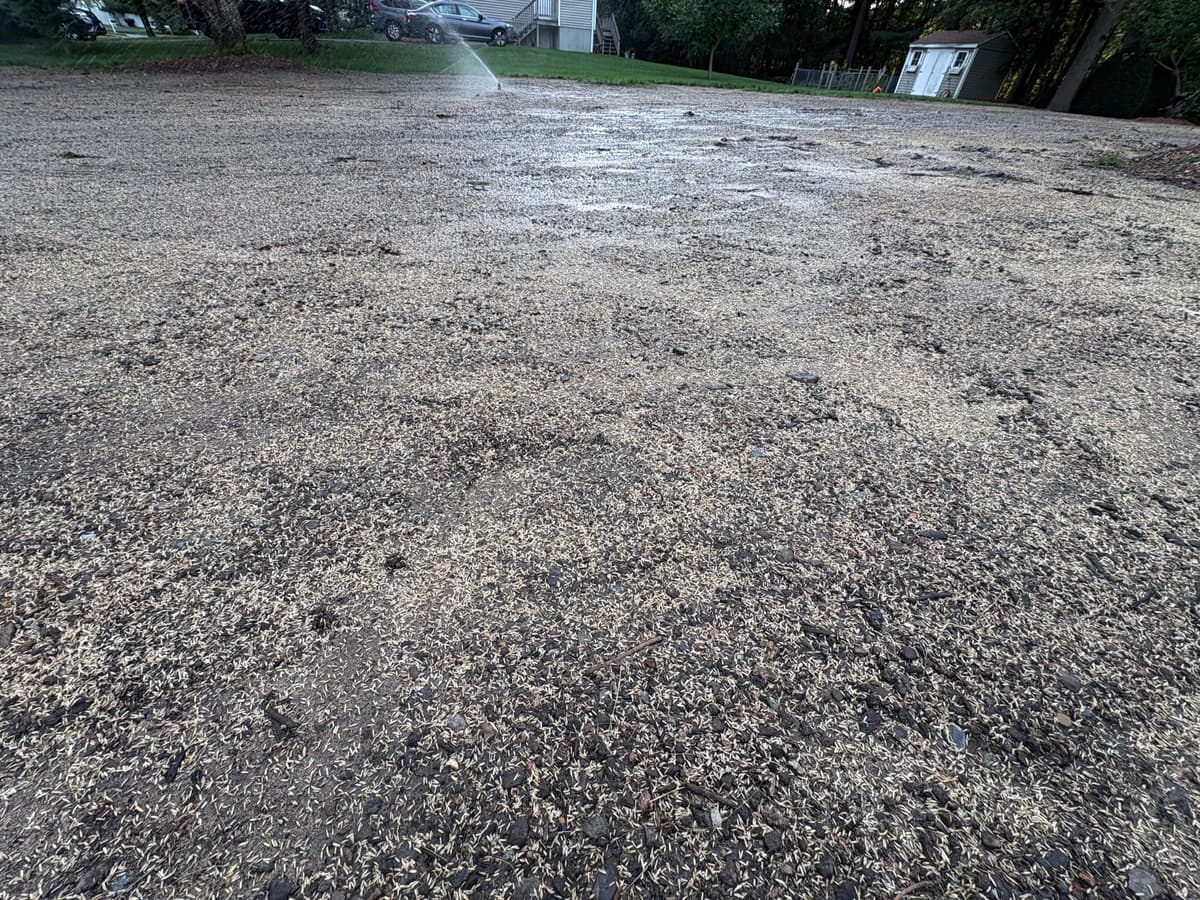
Heavy Seed Application
An ample amount of seed was applied to ensure full coverage. The blend is a New England Mix featuring Kentucky Bluegrass, Fescue, and Perennial Rye Grass — selected for durability, color, and performance in the Massachusetts climate.
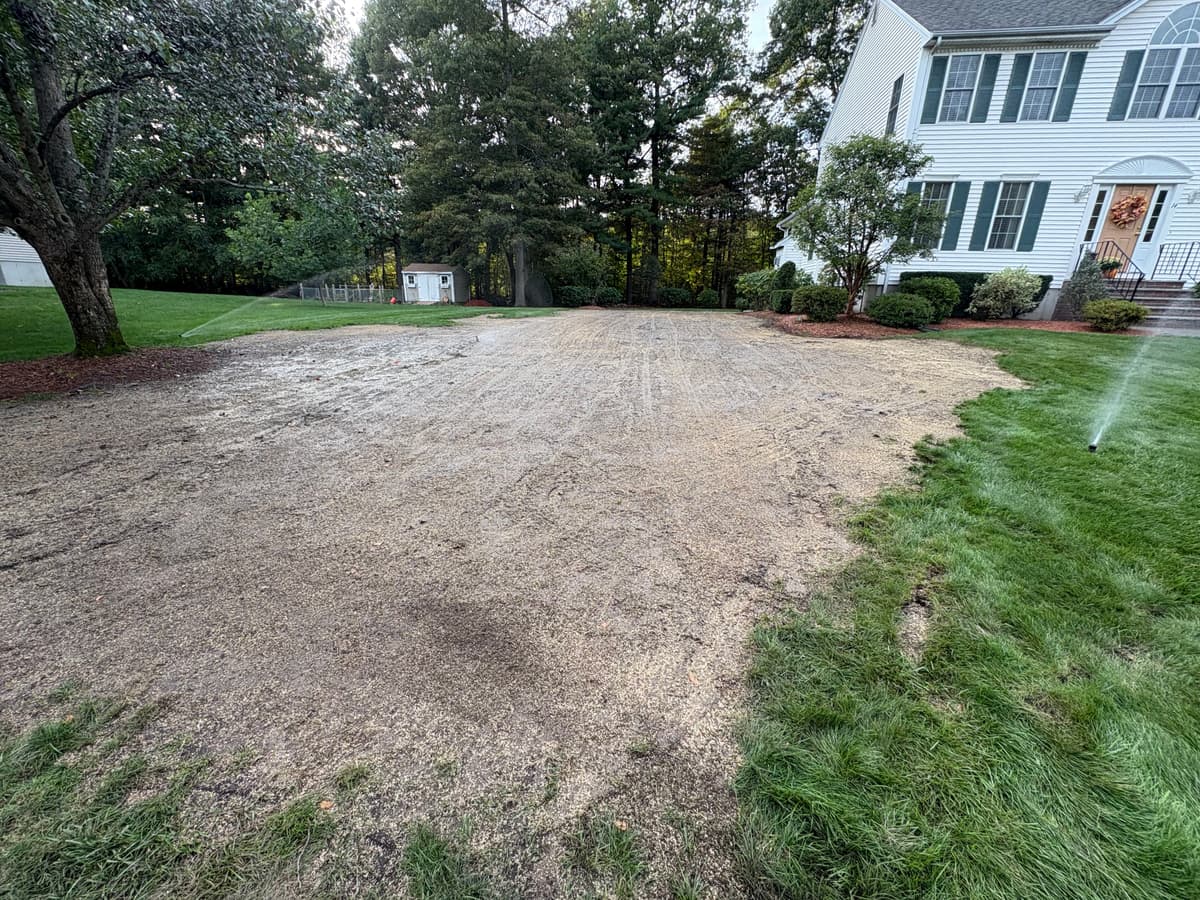
New Soil & Premium Seed Blend
New soil was laid down and a high-quality New England seed blend was applied to the prepared areas. This blend is specifically selected for the Massachusetts climate and growing conditions.
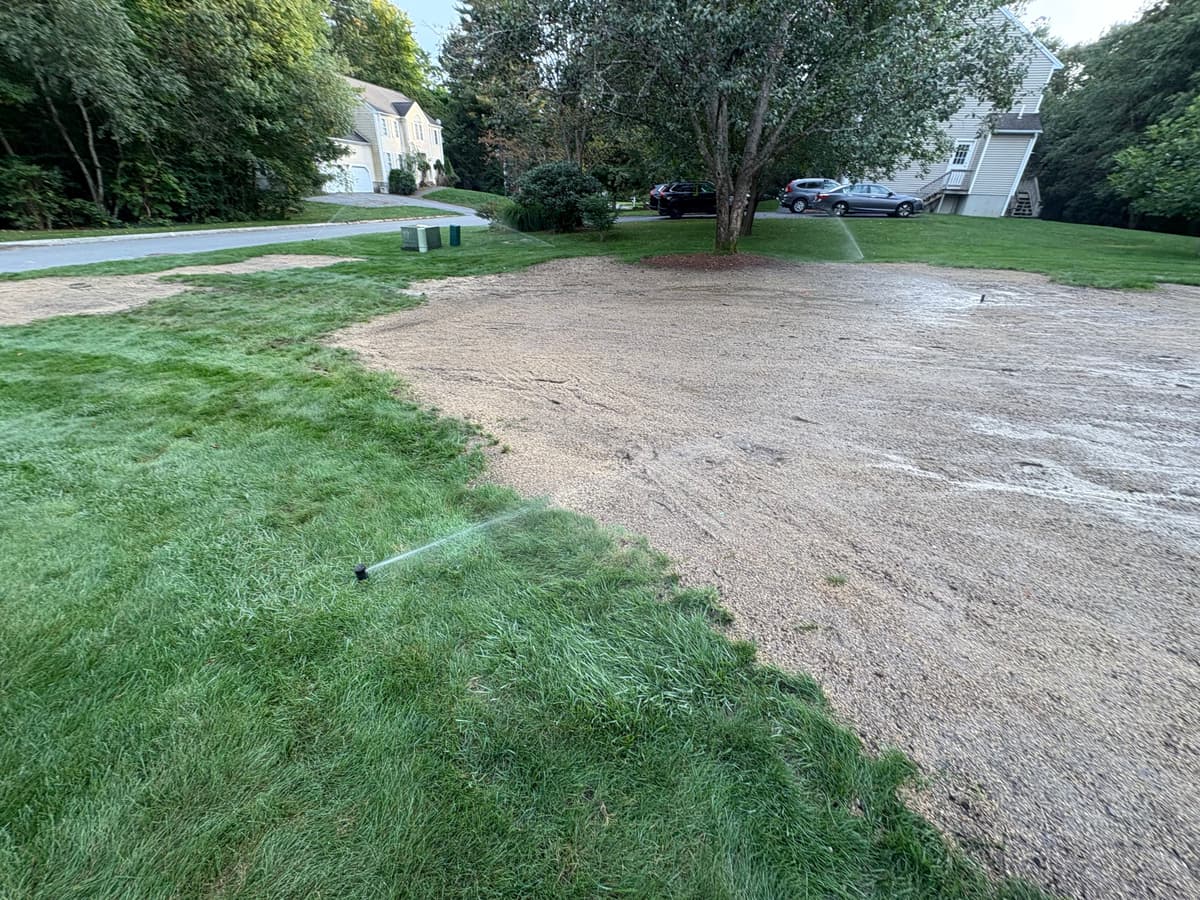
Consistent Watering
Regular watering to keep the soil consistently moist — critical for seed germination. The lawn was watered 2–3 times a day unless rainfall occurred. New seed needs to stay damp for the first 2–3 weeks to establish strong roots.
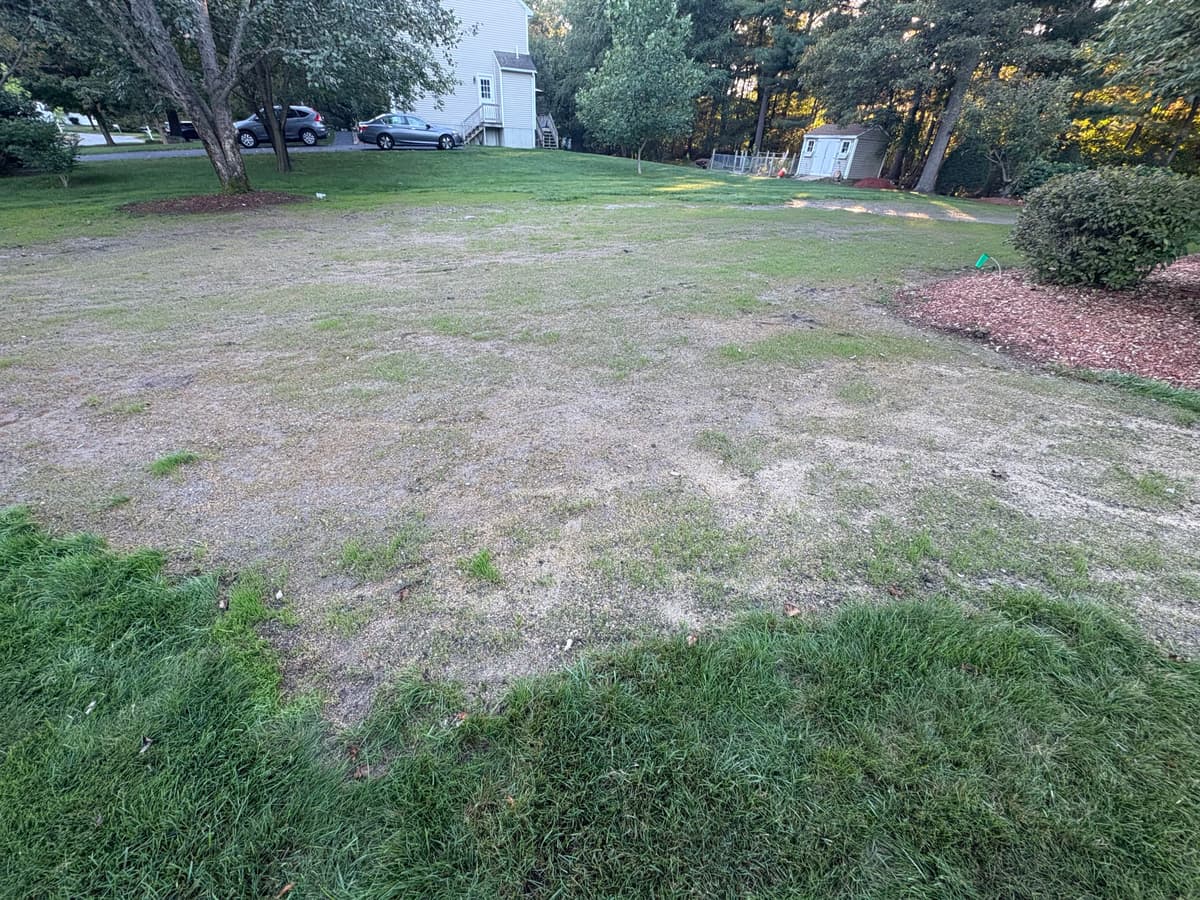
First Signs of Growth
10 days after seeding, the first real signs of germination are appearing. The new grass is starting to fill in across the treated areas.
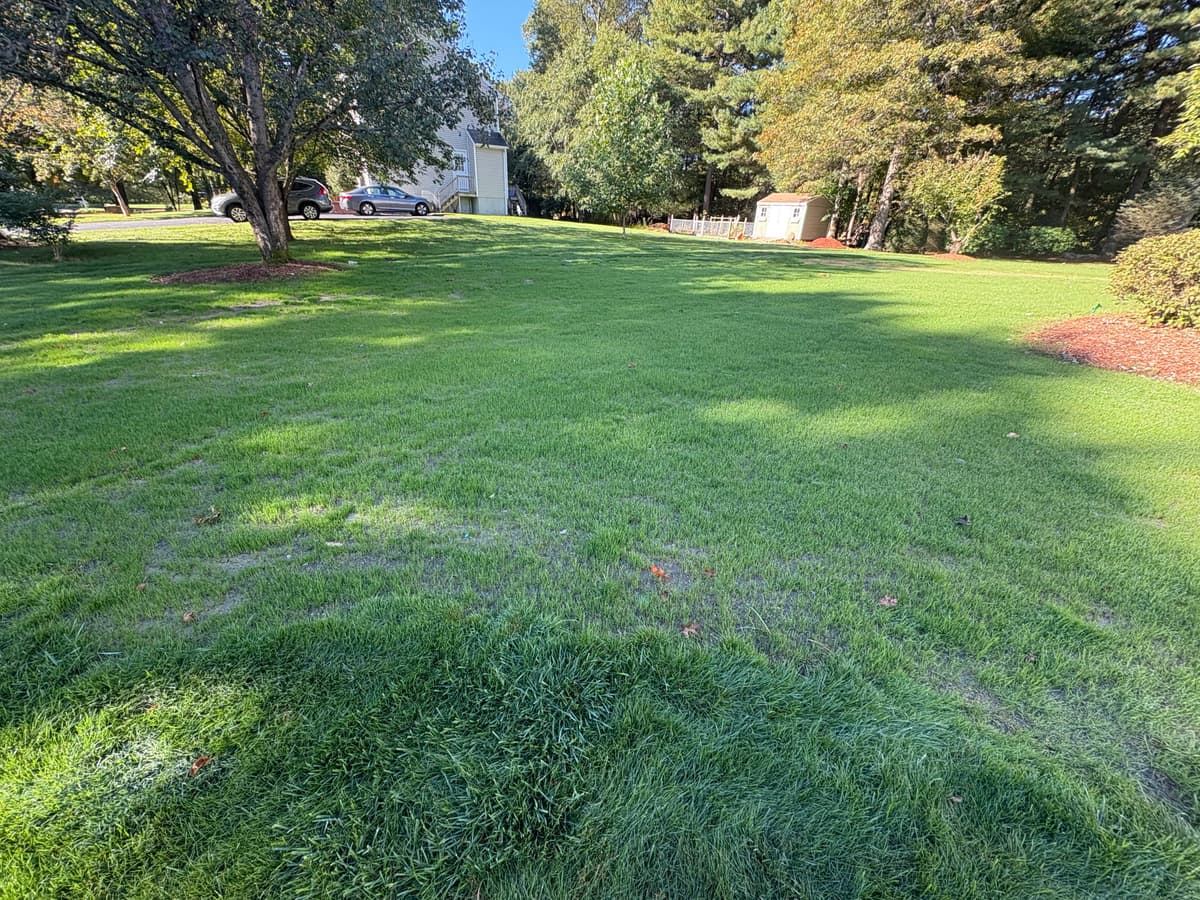
New Seed Emerging
17 days after seeding, the new grass is clearly filling in. Green coverage is spreading nicely as the seed continues to establish.
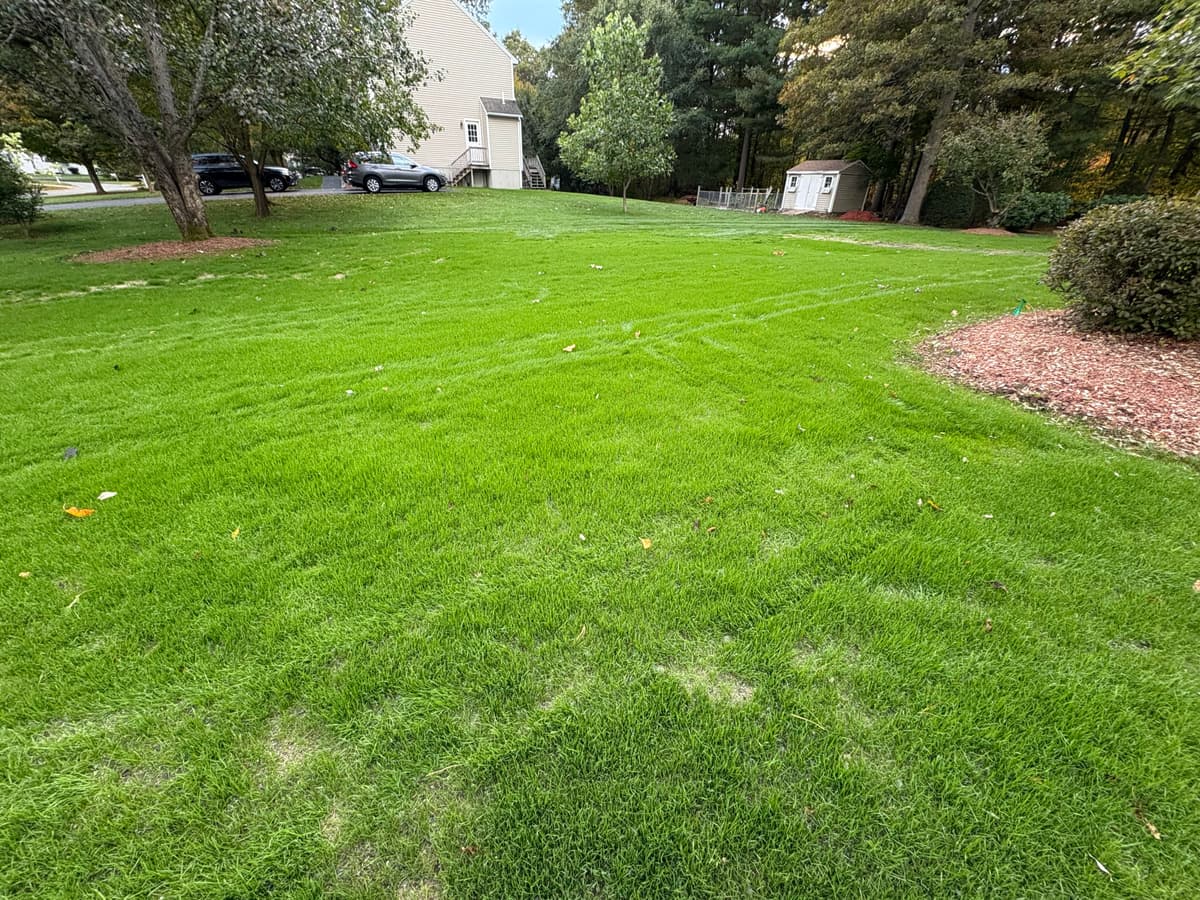
Starter Fertilizer Applied
With the new grass well-established, a starter fertilizer was applied to give the young turf a boost. This encourages deeper root growth and thicker blade density heading into the cooler months.
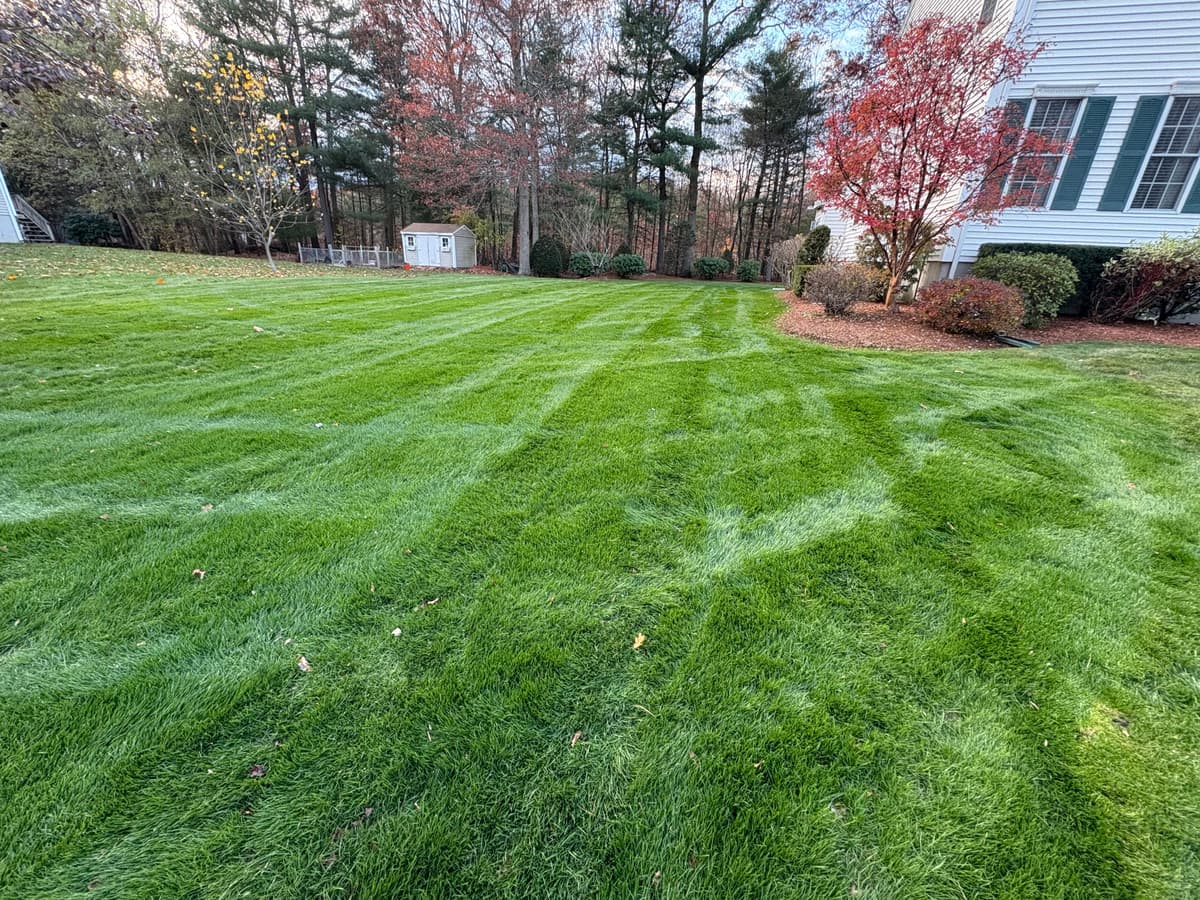
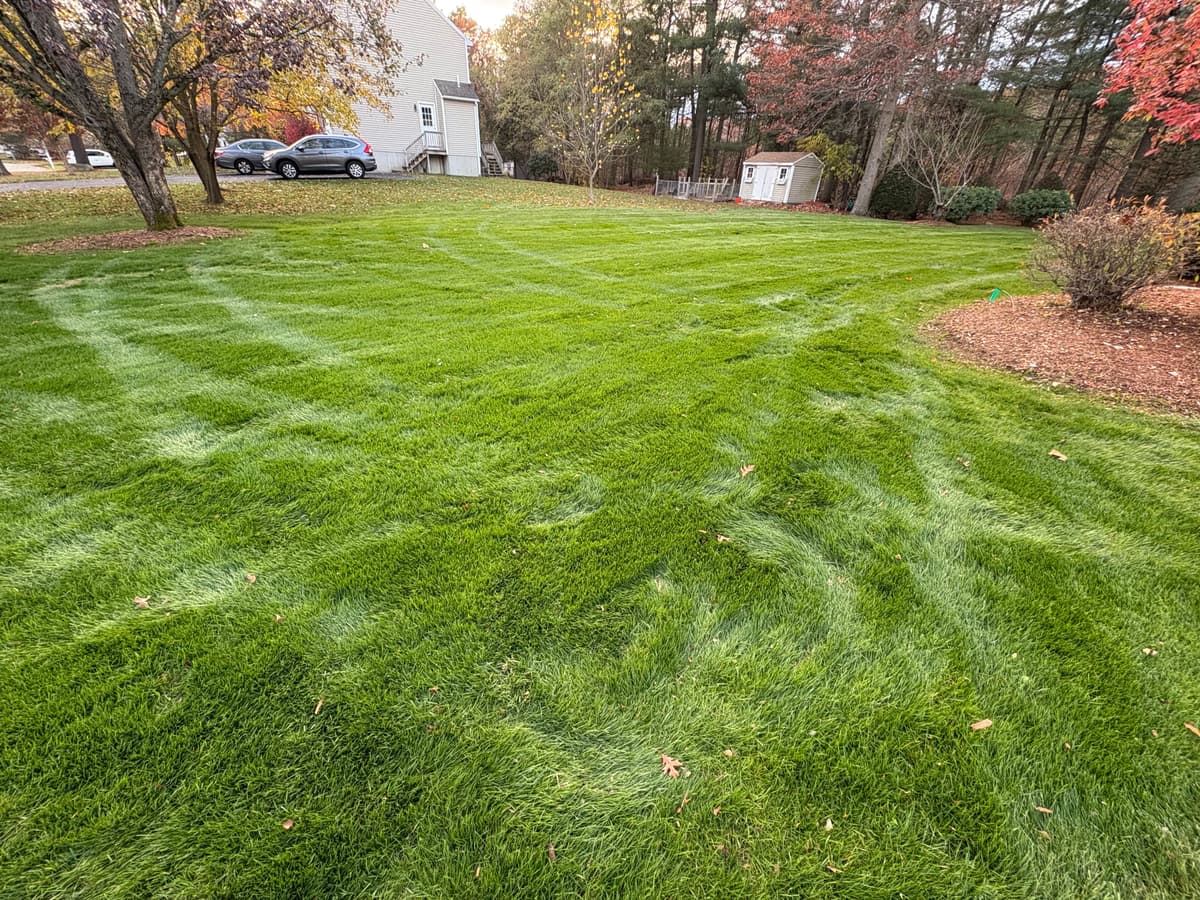
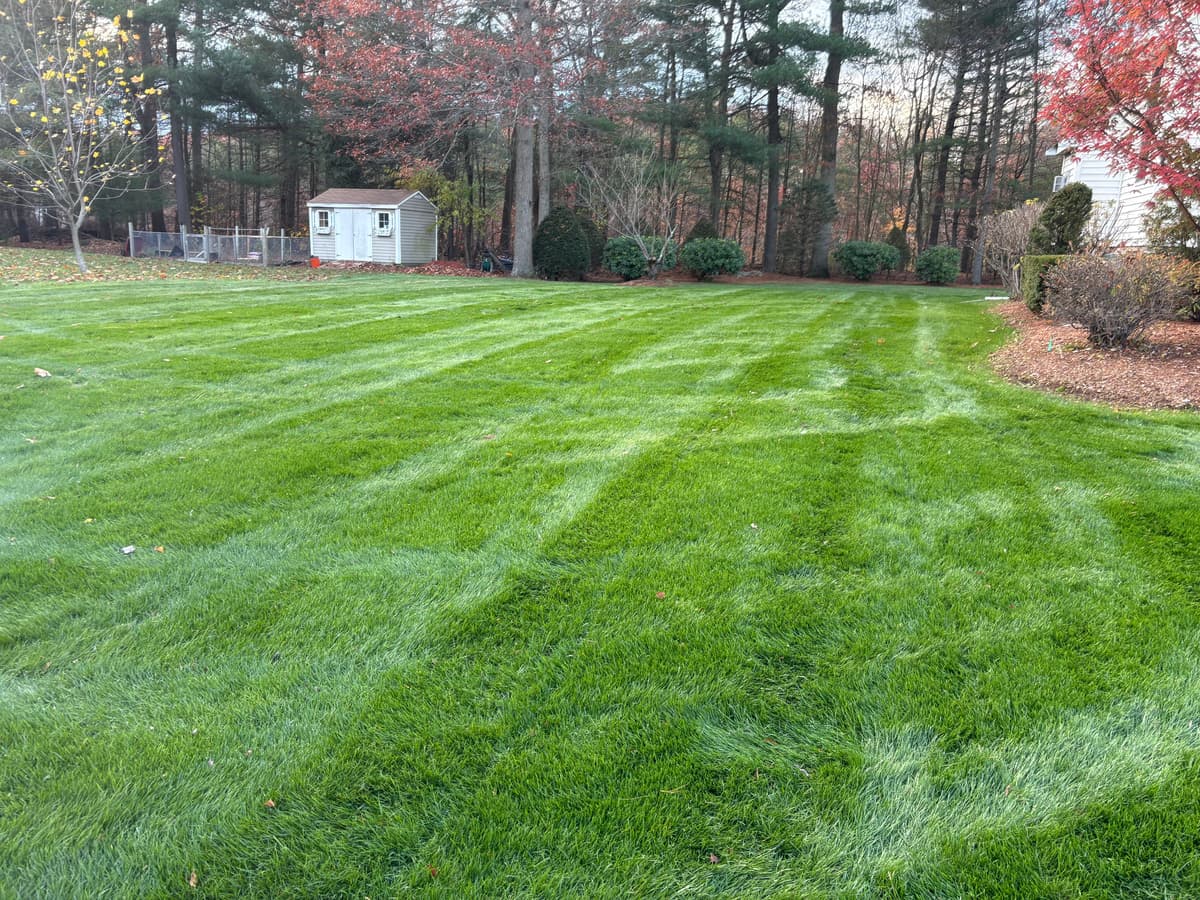
Renovation Complete
The affected areas have been fully renovated. What was once patchy, pale bentgrass is now thick, healthy turf with rich green color and strong density — ready to go into winter dormancy and come back even stronger in spring. About 5 weeks later, the lawn got one last fertilizer to close out the year: a winterizer plus lime to set it up for a strong start next season.
For this project, Turf Pro, Inc. provided soil and turf management while coordinating with a local landscaping contractor for lawn installation and seeding.
Want Results Like This?
Every lawn is different. Let us evaluate yours and put together a custom plan — no pushy sales, just honest advice.
Schedule FREE Estimate