Drought & Heat Stress Recovery
A less invasive approach to restoring a lawn heavily damaged by summer drought and heat stress.
Aeration, Dethatching & Overseeding
Massachusetts Residential Property
This lawn was heavily damaged by drought and heat stress over the summer. Rather than a full tear-out, we took a less invasive approach — aeration, dethatching, and overseeding — to restore it at a fraction of the cost. The step-by-step timeline below shows how the lawn came back to life.
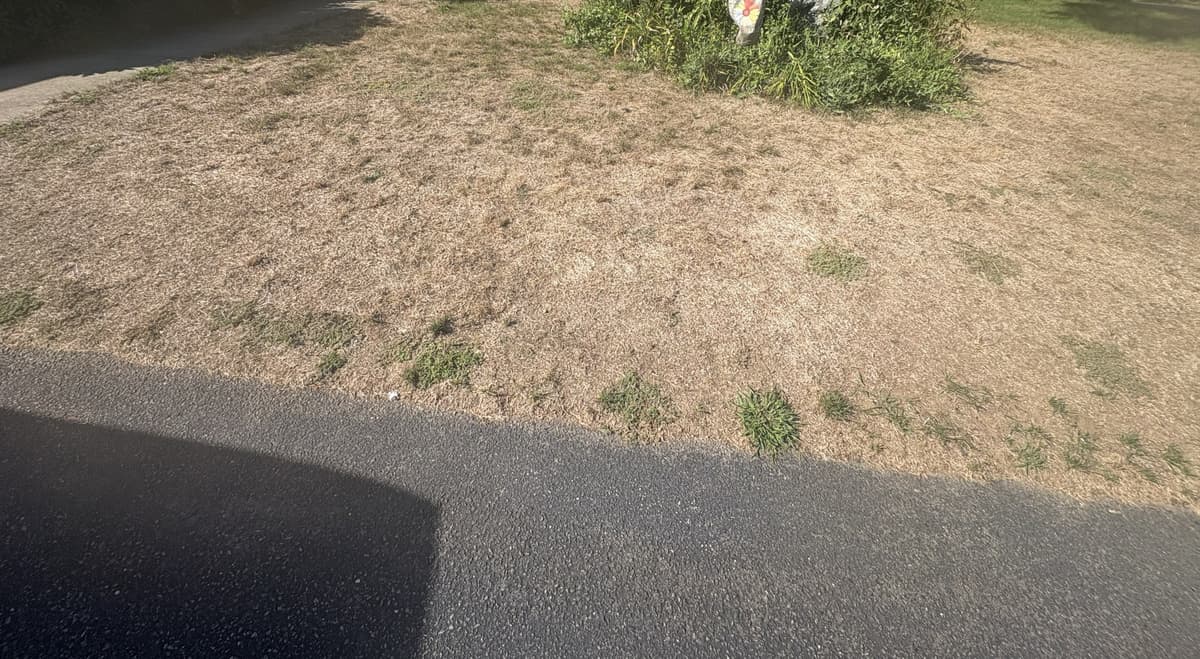
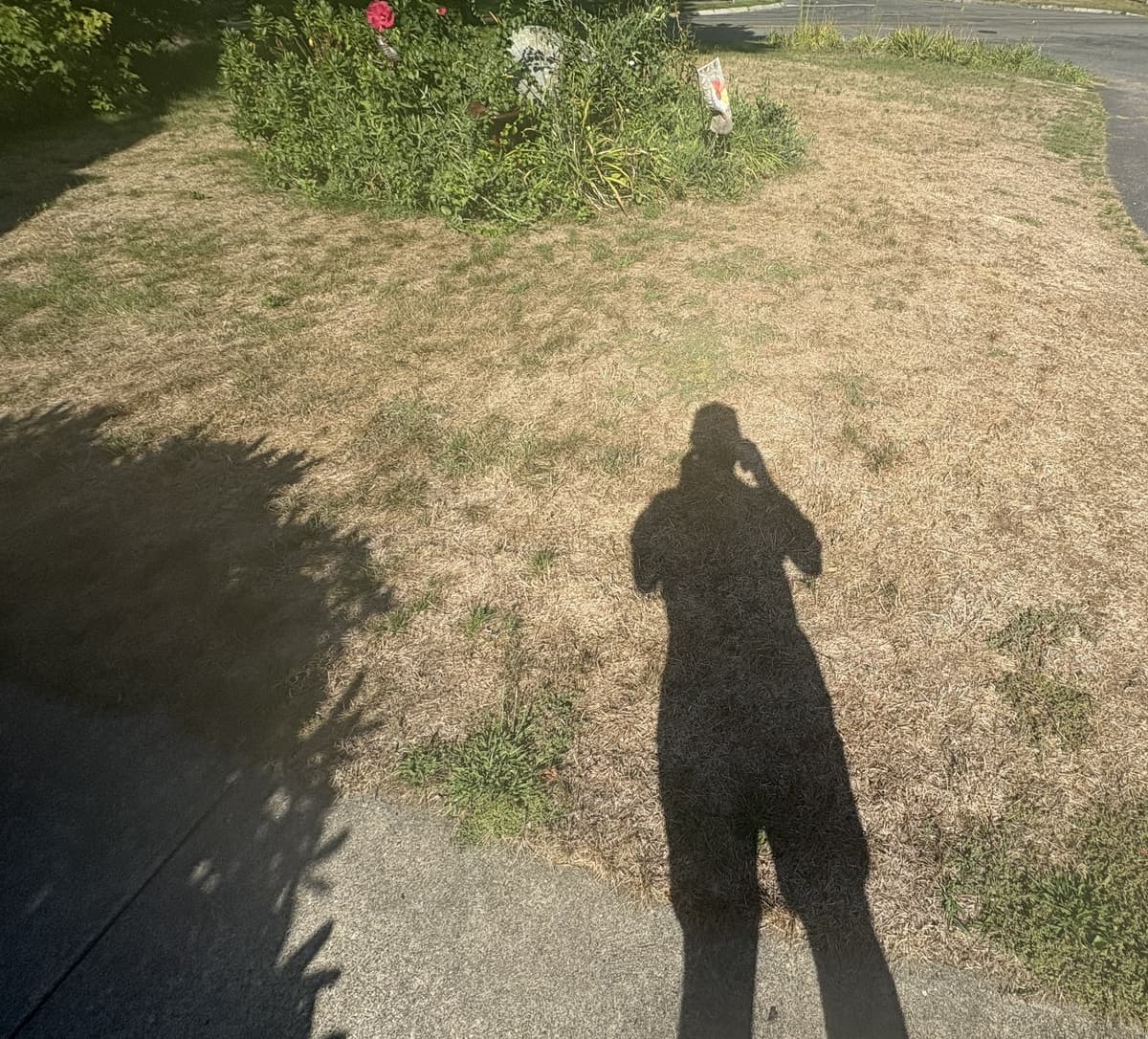
Severe Drought & Heat Stress Damage
The lawn was heavily damaged by drought and heat stress over the summer. The front yard was almost entirely brown and dried out, with only scattered patches of green surviving. Rather than tearing everything up, we recommended a less invasive, more cost-effective approach.
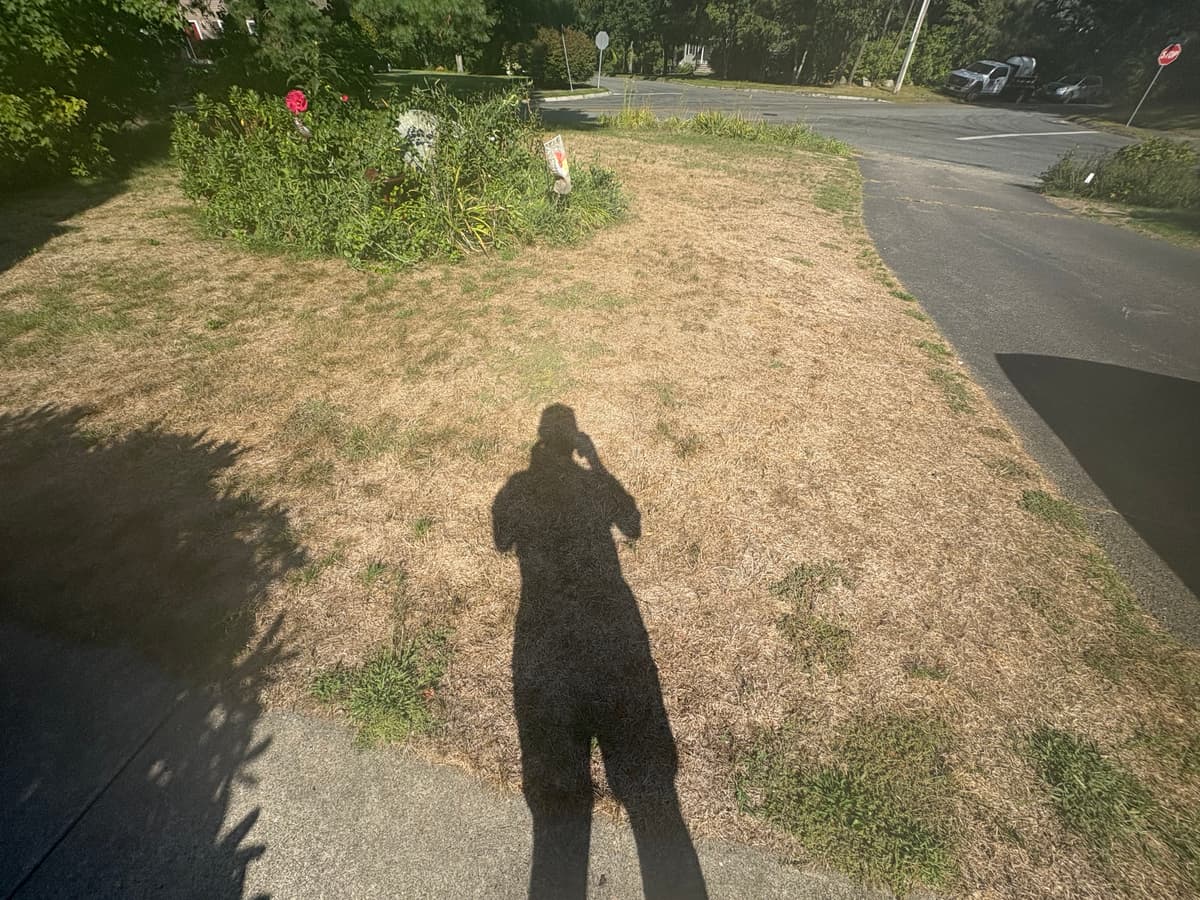
Damage Up Close
A closer look at the extent of the damage. The turf was damaged and dead across large sections with minimal healthy grass remaining. The root system was still intact in most areas, which supported the decision to renovate rather than replace.
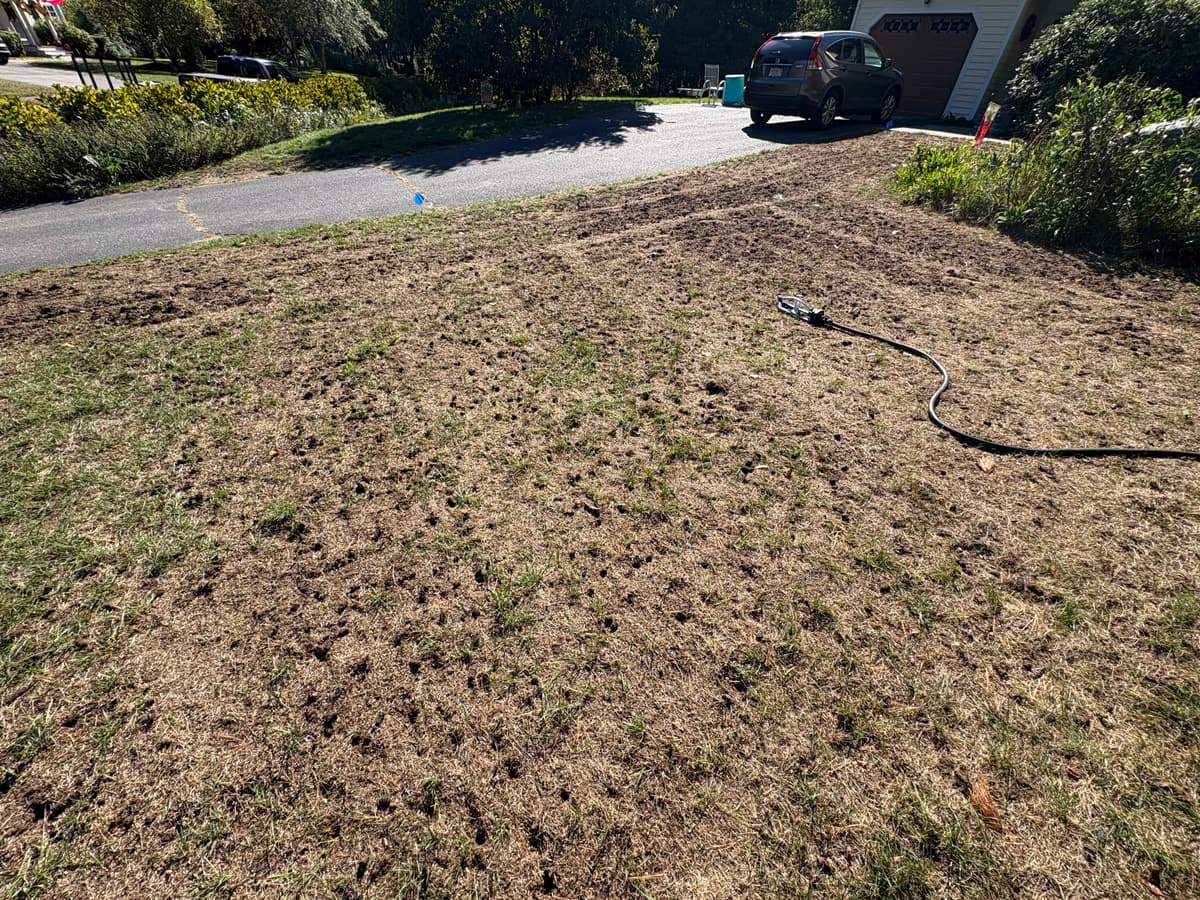
Triple Aeration, Double Dethatching & Overseeding
We aerated and overseeded the entire lawn. In the front where the damage was worst, we triple-aerated and double-dethatched, then worked seed both into the soil and across the surface. Because of the short window before winter, we applied a starter fertilizer at the same time as aerating and seeding. This aggressive prep gave the seed excellent soil contact without the cost and disruption of a full tear-out. From here, watering at least twice a day — unless there's rain — for a minimum of a couple weeks was key to keep the soil moist and give the seed the best chance to germinate.
Recheck & Additional Seeding
We stopped by a few days later to recheck the work and added more Turf Type Tall Fescue to the front and a couple of spots on the left side where the lawn was heavily damaged. This seed variety does better in full sun. We decided against rolling since the seed already had excellent contact after being worked into the soil and laid on top — rolling could have compacted the soil and created drainage issues.
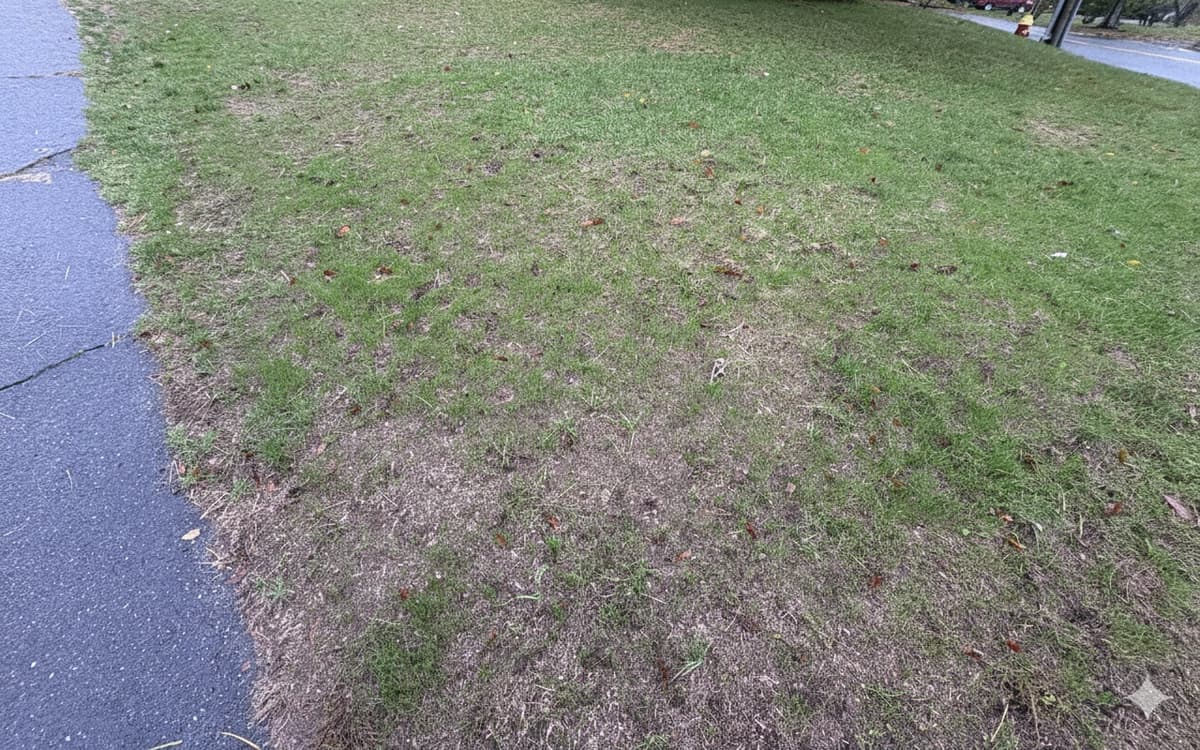
New Seed Is Emerging
Just 14 days after planting the grass, the new grass is clearly emerging across the treated areas. Early germination is visible throughout the front section where the triple aeration and double dethatching gave the seed strong soil contact.
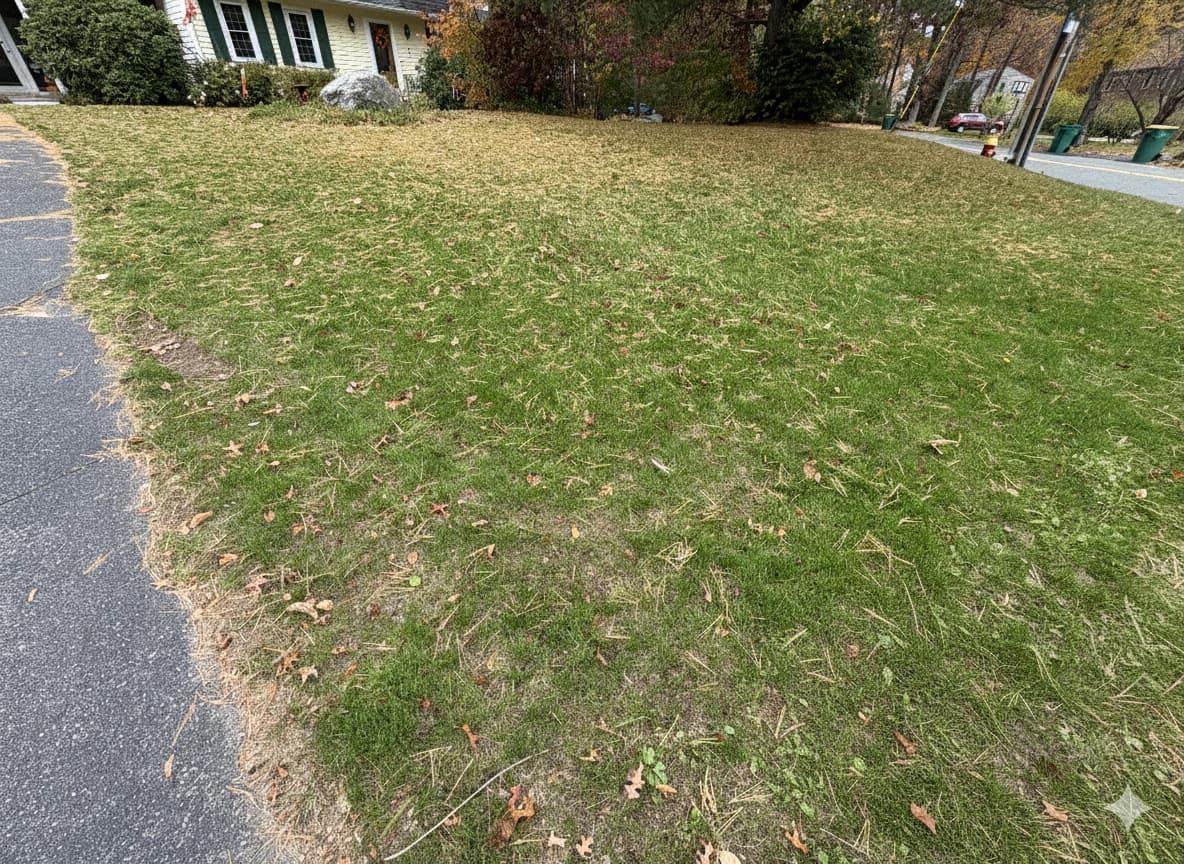
New Growth Coming In
The new seed is germinating and filling in across the previously damaged areas. Green coverage is spreading nicely where the lawn was once entirely brown and dormant. The less invasive approach is clearly working.
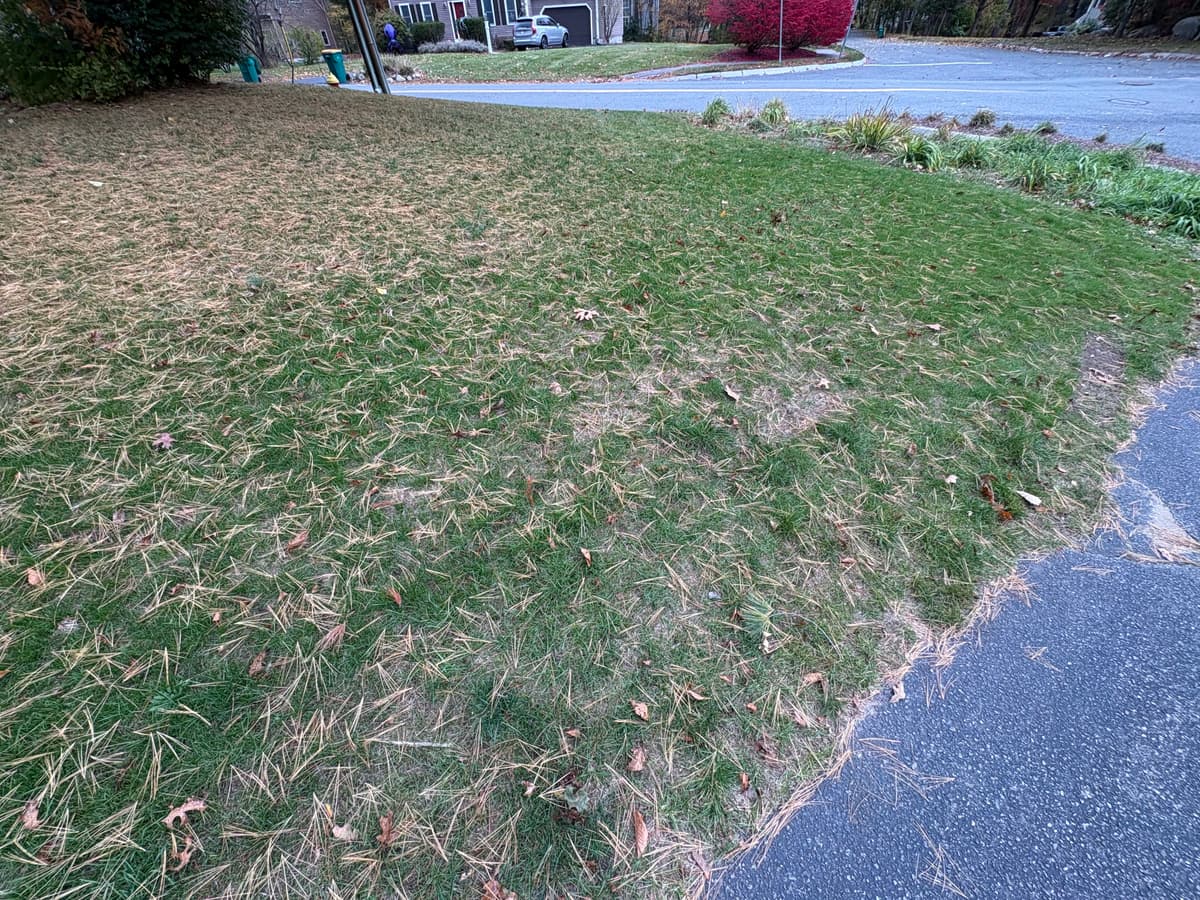
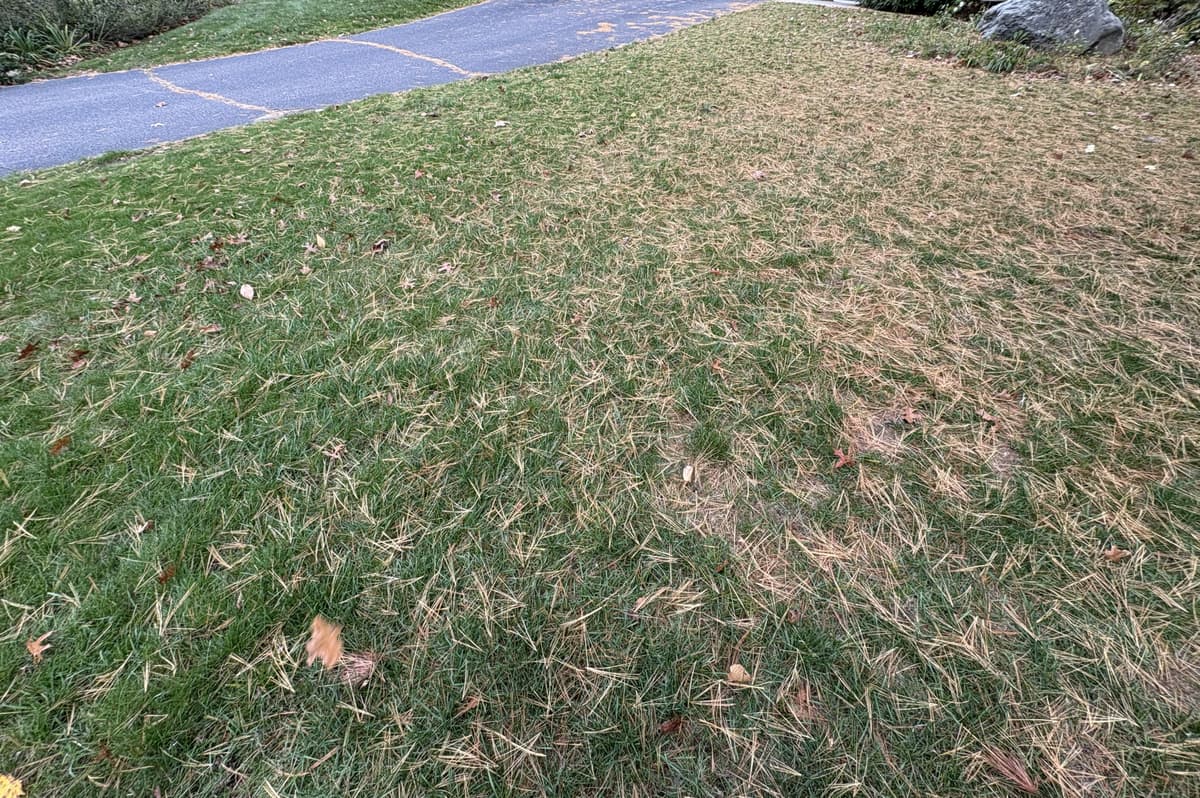
Lawn Restored
What was once dried-out, heat-stressed turf is now thick, green, and healthy — all without the cost of a complete tear-out. The Turf Type Tall Fescue has filled in beautifully in the sun-exposed areas. A couple of small spots will need to be patched in the spring, but given the state the lawn was in and the type of work done, this is a great result.
The final two photos were taken just before a fall cleanup. All pine needles and debris were cleared off prior to winter, and the lawn was mowed.
For this project, Turf Pro, Inc. provided soil and turf management while coordinating with a local landscaping contractor for lawn installation and seeding.
Want Results Like This?
Every lawn is different. Let us evaluate yours and put together a custom plan — no pushy sales, just honest advice.
Schedule FREE Estimate